

If you’re here, you’ve already taken a powerful first step—showing up for yourself, your body, and your relationship with food. Whether the workshop was your introduction to intuitive eating or you’re looking to enhance your current skills, this space is designed to help you integrate what you experienced during our mind-body nutrition session into your everyday life.
Aim to eat every 3-4 hours.
Most of us feel the best when we’re eating this often to help balance our blood sugar, keep energy stable and prevent extreme hunger from bubbling up. For each eating opportunity (yes, including snacks!), it’s smart to have a combination of carbohydrates, protein and fats. Some snack ideas include:
- Granola bar, banana and mixed nuts
- Apple, graham crackers and peanut butter
- Hummus, carrots and pita chips
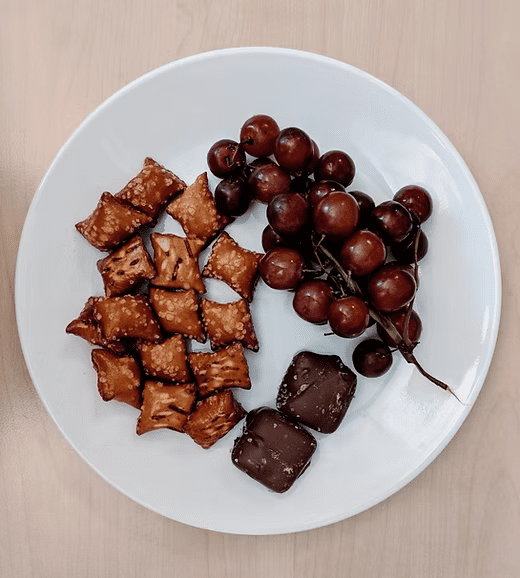
- Peanut butter pretzels, grapes and chocolate candies
Meet your body with curiosity, not judgment.
Research shows that using curious awareness with our thoughts greatly benefits our mental health. If we feel judgment towards a normal reaction from our body, we are often developing a story or assigning meaning to a natural response that can create unnecessary harm. Here’s an example of how practicing curious nonjudgmental awareness may look.
Judgment: “I’m already feeling hungry 30 minutes after my last meal. This must be a sign that intuitive eating doesn’t work well for me and my body.”
- Notice that you may be creating a story that’s informing your self-judgmental thoughts.
- Shift awareness to ask your body what’s happening in this present moment. It might be helpful to focus on your senses and what you can see, hear, smell, and feel around you.
- Disrupt judgment by using facts to validate your awareness: “I’m feeling hungry 30 minutes after my last meal. This likely means my body didn’t get enough to eat for lunch. I’ll go sit with my coworker to enjoy a cinnamon roll that I can smell from the breakroom.”
- Recognize and reframe shame. If we don’t name it or understand what’s happening, we can’t know how it’s truly influencing our thoughts, behaviors or feelings. The next time you notice critical thoughts or blame coming up, try a gentle reframe. Some examples are:
- “I still deserve to eat, even though I’m having a tough body image day.”
- “I’m proud of myself for showing up to class today, even if my capacity felt different than normal.”
- “It’s okay that I overate during this meal, I’m human and it’s a natural part of practicing intuitive eating. I will still have my snack later before dinner.”
Surround yourself with non-diet, Health At Every Size-aligned resources.

@kharveyfit Image link
You can further support your intuitive eating journey by examining your social media environment. Do you follow accounts that promote dieting or weight loss? How does it make you feel when you see someone else trying to force their body to look a different way? What about following more accounts that show people who look like you engaging in joyful movement? Our blog posts are a good source of non-diet nutrition information and may help you find other resources you’ll love:
- Best Body Image Books: Acceptance and Liberation
- Diet Culture on Social Media: How to Recognize It and Protect Your Mental Health
- Why Diets Don’t Work and How to Find Food Peace Without Them
- Why Intuitive Eating Feels Harder than Dieting
Intuitive eating sounds like the answer to food freedom (and it is!) but it can also feel really hard to put into practice. If you’re feeling stuck, curious, overwhelmed or just want more support, that’s very normal. Everyone’s relationship with food is uniquely their own and we all jump into intuitive eating from a different starting point.
If you want an individualized approach to make intuitive eating work for your lifestyle, we can help!
At Ruby Oak Nutrition, we’re a group of dietitians who take a non-diet, body-positive, identity-affirming approach to recovery and healing your relationship with food.
Go here to learn more about intuitive eating nutrition counseling for kids, teenagers, and adults. You can work with your dietitian in person at our Raleigh office in Oakwood, or virtually from anywhere.
Ready to book an appointment? Click here to book online. We accept most major insurance plans, and most of our clients are able to work with us for free.
Not ready to commit to counseling but want more information about the anti-diet approach? Subscribe to our weekly newsletter.

0 Comments