

I’m a dietitian and former college rower, and I know firsthand that transitioning out of serious athletics is a huge life shift that also impacts your relationship with food.
When you’re a serious athlete, food isn’t just food. It’s fuel. It’s part of your training routine. It might be something that you feel like you need to be disciplined around. Your meals are planned around your workout schedule, and your coach(es) have probably given you various bits of nutrition advice over the years. (Whether or not it was good nutrition advice is another story, but we’ll get into that later.) Over time, eating becomes less driven by internal cues and more structured around external rules.
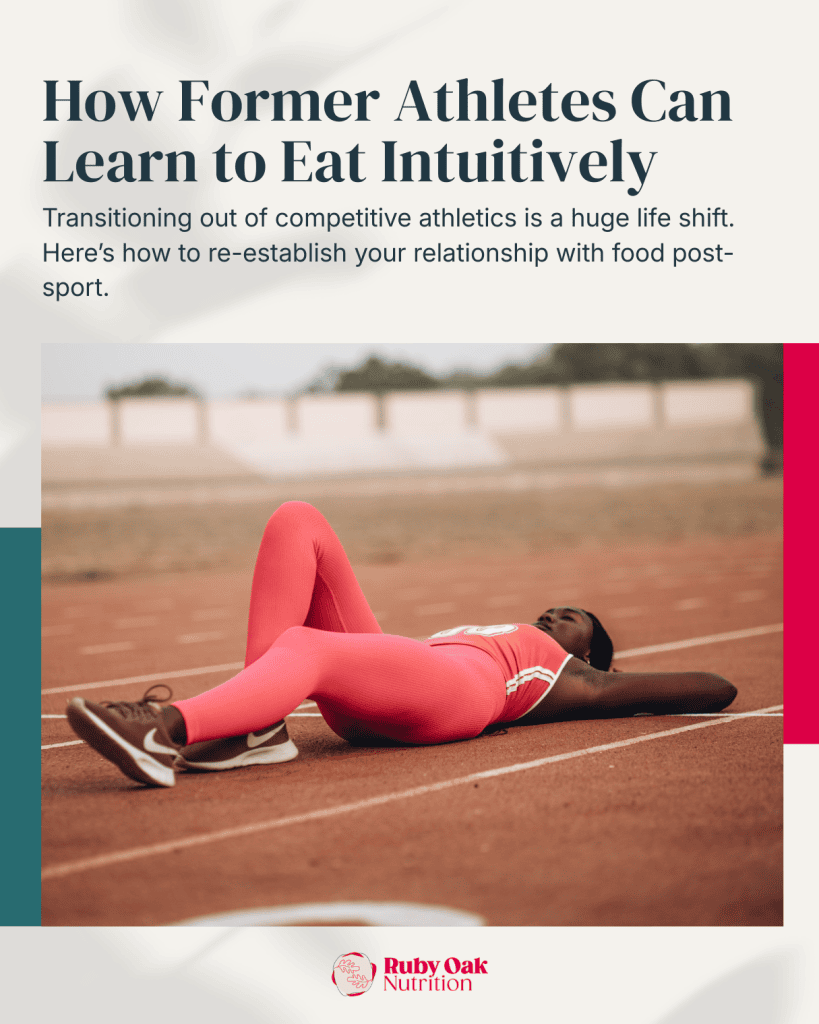
And then one day, you retire from your sport, or at least shift from a serious athlete to a more casual one. Suddenly, the intense workout schedule is gone, along with the tight-knit community and sense of identity. In a way, it’s freeing to have so much time and brain space back to focus on other things. But at the same time, it’s a real shock to the system.
One of the things I’ve noticed about the transition from “serious athlete” to “regular human” is that a person’s relationship with food often changes pretty drastically. And it’s more than just the fact that you need fewer calories when you’re not working out twice a day. It’s also the fact that you suddenly have the freedom to make food choices based on your body’s internal cues, instead of performance goals. And for many folks, this freedom can feel overwhelming.
How can your relationship with food change when you retire from sport?
Athletes often spend years being told what their bodies need: how to fuel before practice, what to eat for recovery, how body composition may affect performance. These guidelines can be helpful in a performance setting, but they can also make it tough to reconnect with internal cues like hunger, fullness, and satisfaction when sports performance isn’t your number one priority anymore.
Without the structure of athletics, former athletes might not know what “normal” eating looks like. This often shows up through lingering food rules (“I need to eat X amount of carbs at night to fuel tomorrow morning’s workout,” or “I should skip dessert this afternoon so that I don’t feel weighed down at the gym later”). Or, there might be a deeply held belief that food and exercise are inextricably linked, and you need to “earn” one with the other. Former athletes might also feel anxious about the way their body changes, which might lead to harmful food restriction or dieting patterns. These experiences are so common, yet rarely talked about.
What does intuitive eating look like for former athletes?
As a former athlete, it can be scary to suddenly hear: “You can eat whatever you want.” (I relate!) When someone has spent years following structured nutrition plans, autonomy isn’t freeing, it’s intimidating.
But this newfound food freedom can also be reframed as something powerful. It can be the beginning of rebuilding trust with your body and re-learning how you like to eat.
When I work with clients who are stepping away from serious athletics, we start by acknowledging the fear that can come with this transition while also reframing it as a gift of freedom. For many of these clients, it’s the first time in their lives that they’ve been able to eat and move their bodies however they want.
Here are some questions I encourage former athletes to ask themselves when they’re starting on their intuitive eating journey:
- What foods actually make me feel energized?
- What does satisfaction feel like?
- What kinds of exercise and movement do I enjoy?
- What makes me feel good in my body now that I’m not a serious athlete?
These questions take time to answer, and that’s okay.
How can nutrition counseling help former athletes learn to eat intuitively?
Nutrition counseling provides a supportive space to navigate this transition without judgment. For some former athletes, it means unpacking years of rigid food rules. For others, it means learning how to trust hunger and fullness again. Sometimes it is simply having a place to talk through body changes and identity shifts that come with leaving your sport.
Depending on someone’s past relationship with food and their body, they may need more support in deciding what their new relationship with nutrition looks like. Just as athletes once relied on coaches and teammates for guidance in sport, you deserve the same support when redefining life outside of it.
What does a “healthy” relationship with food look like for former athletes?
Leaving athletics doesn’t mean letting go of everything you learned through sports. Many athletes have a deeply rooted sense of discipline and resilience, and they understand that their bodies are capable of so much. Most people don’t want to lose these things, and that’s fine!
But letting go of the aspects of sports that don’t feel helpful is a great thing, especially when it comes to food and body expectations. Nutrition counseling helps former athletes move from performance-driven eating to self-driven nourishment. Everyone deserves to have a healthy relationship with food and their body, including the athletes who spent years putting performance first.
If food feels overwhelming and you’d like personalized nutrition guidance, we can help!
We’re a group of dietitians who take a non-diet, body-positive, identity-affirming approach to recovery and healing your relationship with food. Go here to learn more about nutrition counseling for kids, teenagers, and adults, in-network with most major insurance companies and offered virtually to clients in North Carolina and over a dozen other states.
Ready to book an appointment? Click here to book online.
Not ready to commit to counseling but want more information about the anti-diet approach? Subscribe to our weekly newsletter.
You might also like:
- Lost Your Period? Here’s What To Do About It
- How to Eat Intuitively When You’re Busy at Work
- Do You Need an Electrolyte Drink For Your Workout?
0 Comments