
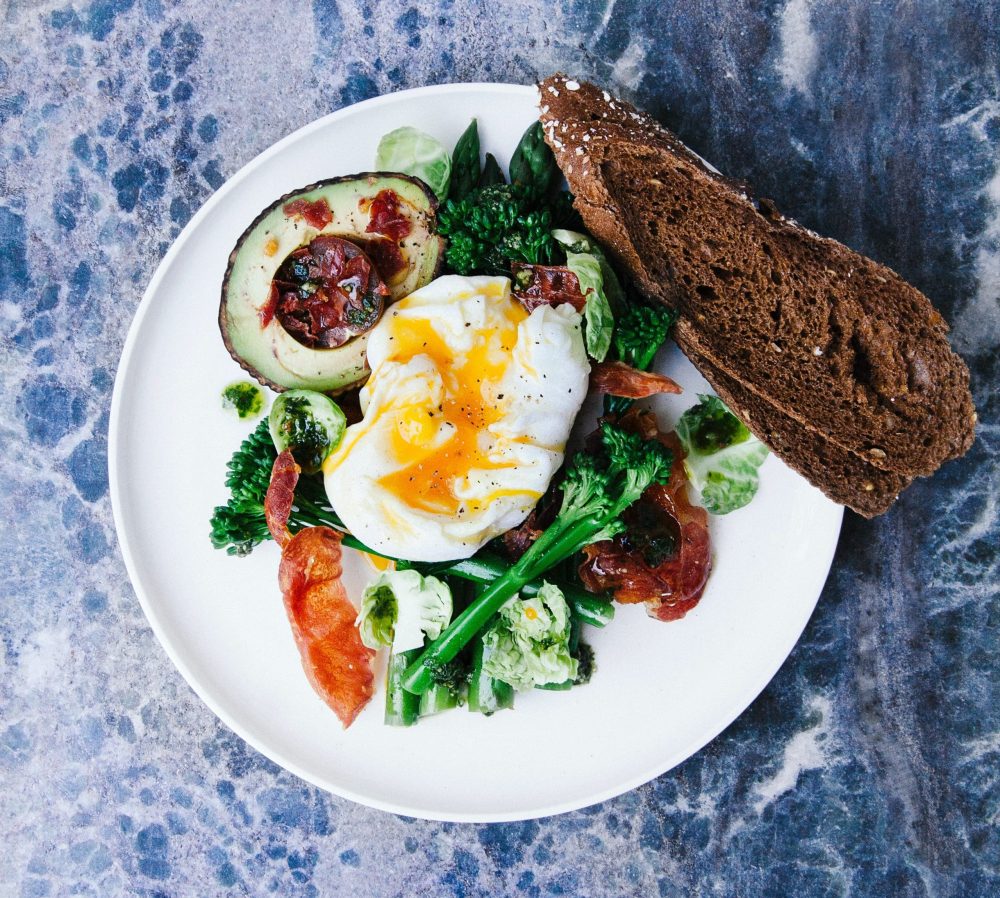
If you’ve ever felt overwhelmed by food choices, stuck in cycles of restriction and guilt, or unsure how to nourish yourself without falling into diet culture, you’re not alone. At Ruby Oak Nutrition, we believe in a different approach to nutrition — one that fosters a positive relationship with food, encourages balance, and prioritizes well-being over rigid rules.
One tool that we use often with clients is the Peaceful Plate. Meant to be used as a guideline — not a strict method of portion control — the Peaceful Plate is a way to build meals that are nutritionally varied, balanced, and satisfying. Literally any food fits on a Peaceful Plate, so it’s possible to follow this method no matter what your food preferences are.
This philosophy is designed to help you move away from food anxiety and toward a sustainable, intuitive, and nourishing way of eating. We understand that it’s not perfect, and that some people will feel triggered by any suggestions that hint at portion sizes or food groups — that’s understandable! If you feel like you’re not in a place to use the Peaceful Plate, close out of this post and go do what feels best for you.
We also know that so many meals don’t actually look like this (with different foods in piles instead of all mixed together). If you tend to eat meals like soups, stews, curries, and stir-fries, you can still use the principles of the Peaceful Plate to make sure each component (starch, protein, fruits/vegetables, and fats/fun foods) is in your meal, without worrying so much about amounts.
Here’s more about what Peaceful Plate is, how to do it, and why each food group matters.
What Is the Peaceful Plate Approach?
The Peaceful Plate Approach is a non-diet, weight-inclusive framework that prioritizes nourishment, satisfaction, and self-trust. It is rooted in the idea that food is meant to be enjoyed, that all foods can fit into a healthy lifestyle, and that eating should feel good—physically, emotionally, and mentally.
The Peaceful Plate is a template for a balanced way of eating that includes a wide variety of foods. The most important thing about the Peaceful Plate is that it’s flexible. Sometimes your plate will look just like the Peaceful Plate, with equal parts starch, protein, and fruit/veg with some fat or fun food mixed in. Sometimes it’ll be half starch and half protein (like chicken tenders and fries at a baseball game). Other times, it’ll have loads of vegetables (like your favorite salad at that great lunch spot near where you work). This isn’t about perfection — it’s about learning how to create balanced meals and doing a pretty good job most of the time.
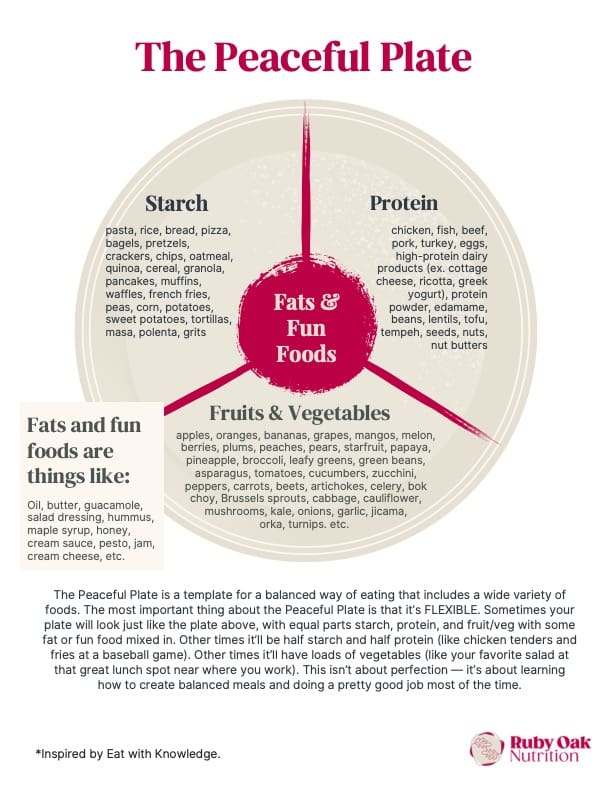
Here’s how the Peaceful Plate breaks down and a (non-exhaustive) list of which foods fit into each category.
Starches (1/3 of your plate):
Pasta, rice, bread, pizza, bagels, pretzels, crackers, chips, oatmeal, quinoa, cereal, granola, pancakes, muffins, waffles, french fries, peas, corn, potatoes, sweet potatoes, tortillas, masa, polenta, grits, noodles, yucca, farro, buckwheat.
Proteins (1/3 of your plate):
Chicken, fish, beef, eggs, turkey, lamb, goat, pork, shellfish, cottage cheese, greek yogurt, tempeh, tofu, seitan, plant-based “meats”, edamame, seeds, nuts, nut butters.
Fruits and vegetables (1/3 of your plate):
Apples, oranges, bananas, grapes, mangos, melon, berries, plums, peaches, pears, starfruit, papaya, pineapple, guava, watermelon, broccoli, leafy greens, green beans, asparagus, tomatoes, tomato sauce, cucumbers, zucchini, peppers, carrots, beets, artichokes, celery, bok choy, gai lan, Brussels sprouts, cabbage, cauliflower, mushrooms, kale, onions, garlic, jicama, okra, turnips. etc.
Fats (a little bit on top or mixed in):
Oil, butter, mayo, guacamole, salad dressing, cream sauce, pesto, jam, cream cheese, etc.
Other fun foods and condiments (a little bit on top or mixed in):
Jam, hummus, maple syrup, honey, gravy, salsa, dumpling sauce, teriyaki sauce, BBQ sauce, ketchup, relish, etc.
Why variety matters
ALL foods contain both macronutrients and micronutrients. MACRONUTRIENTS provide energy (AKA calories) and perform different functions Our bodies need them in large amounts every day. MICRONUTRIENTS are vitamins and minerals — they don’t provide energy, but they perform various roles that keep our bodies functioning properly.
CARBS are a macronutrient that give you energy.
Carbs are our body’s main (and preferred) source of energy. They break down to glucose in our bodies and power our muscles, organs, and brain. They also support healthy serotonin levels, which improves sleep and helps keep your mood stable. Whole grains and starchy vegetables like potatoes, sweet potatoes, and yucca also provide antioxidants and fiber for digestive and heart health, and they help us feel satisfied. Carb-rich foods contain various vitamins and minerals. Not eating enough carbs can lead to fatigue, hunger, worsened mood, difficulty recovering after exercise, poor sleep, and more.
PROTEIN is a macronutrient that supports your muscles, skin, tendons, organs and bones.
Think of protein as the building block of your body — literally every cell depends on protein. Though lots of people think protein is just important for “bulking up” (AKA building muscle), it has other important functions, including blood clotting, metabolism, immune function, and tissue maintenance/repair. Protein-rich foods contain various vitamins and minerals. Meat sources of protein are typically high in iron (which carries oxygen through the blood) and vitamin B12 (which is essential for metabolism). Too little protein can cause muscle loss, decreased metabolism, electrolyte imbalances, slow recovery and wound healing, and more.
FAT is a macronutrient that for long lasting energy and satiety.
Eating fat is essential for optimal health, and very low fat diets can cause major health risks. Fat provides long lasting energy — it’s our body’s second favorite energy source, after carbs — and helps the body absorb vitamins and minerals. It protects our cells and organs, and maintains body temperature. When fat is broken down, its byproducts are converted into essential hormones that control all kinds of bodily functions. Certain kinds of fats can even act as anti-inflammatories and may help reduce the risk of heart disease. Inadequate fat intake may cause reproductive failure, fatigue, poor healing and liver & kidney disorders.
FRUITS and VEGETABLES are loaded with micronutrients.
Fruits and vegetables are packed with antioxidants, phytonutrients, vitamins, and minerals, which making them nutrition powerhouses. Fruits are high in carbs, and vegetables have some carbs, too. Both are high in fiber, which promoteds heart health and digestion. Fruits and veggies can help prevent disease and increase our immune systems to help fight off metabolic stress. Inadequate fiber intake can cause constipation, a weakened immune system, higher risk of various chronic diseases, and eye & skin disorders.
A truly sustainable, nutritious, and intuitive way of eating takes into account: NUTRITION, TASTE, SATISFACTION, CULTURAL TRADITIONS, and FLEXIBILITY.
Yes, nutrition matters and what we eat is one of many things that impact our health and how we feel from day to day. Filling your plate with a variety of foods from different groups is a great way to meet your energy and nutrient needs without getting bored.
But mindful and intuitive eating will never be sustainable if you don’t like what you’re eating. Over time, you’ll learn how to make meals that look similar to the Peaceful Plate — most of the time. Sometimes, it just won’t be possible to include starch, protein, fruits/vegetables, and fat/fun food into a meal. Or, your plate won’t look like the one above. That’s OK! Actually, it’s normal not to eat “perfectly” all the time.
If the Peaceful Plate stresses you out, reach out to us! We’ll help you customize it in a way that works for you, and talk about mindset shifts towards more flexibility.
If you’re struggling with an eating disorder or disordered eating, we can help! We’re a group of dietitians who take a non-diet, body-positive, identity-affirming approach to recovery and healing your relationship with food. Go here to learn more about nutrition counseling for kids, teenagers, and adults, in-network with most major insurance companies and offered virtually to clients in North Carolina and over a dozen other states.
Ready to book an appointment? Click here to book online.
Not ready to commit to counseling but want more information about the anti-diet approach? Subscribe to our weekly newsletter.
You might also like:
What Is Gentle Nutrition In Intuitive Eating?
Do You Need an Eating Disorder Meal Plan for Recovery?
What Is the Plate-by-Plate Approach® For Eating Disorder Recovery?
How to Set Nutrition Goals Without Falling Into Diet Culture
0 Comments