
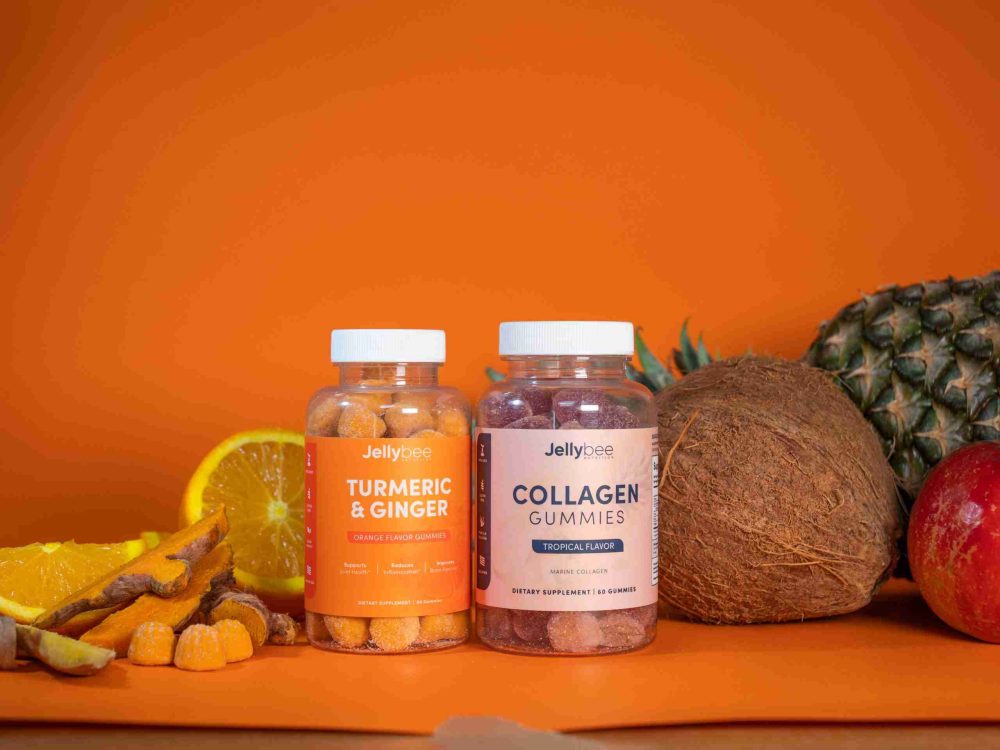
It’s no secret that, as a dietitian, I’m against most dietary supplements. They’re unregulated and typically unnecessary. But still, people ask me all the time: Are supplements worth it? And while my answer is usually ‘no,’ I think it’s important to explain why that is.
Supplements are unregulated.
The supplement world is a black hole of “wellness.” And I mean that in the broadest possible sense. These days, there’s a pill, powder, or tincture for pretty much everything. Don’t like your wrinkles? Chew on a collagen gummy. Feel a little blue? Get yourself some #Mood Pills. Worried that your hormones are “out of balance” (whatever that might mean?). Try an organic superfood latte powder to balance them right back.
No matter what you’re struggling with, there’s a supplement for it. This is an untested hypothesis, but I bet if you Google “[insert LITERALLY ANY physical, mental, social, or emotional woe here] supplement” right now, several relevant results will come up. The options are endless.
Of course, the vast majority of these options are also completely useless. (For an example, check out my review of GEM Vitamins.) Supplements are classified as food products, not pharmaceuticals. That means they’re not tested or regulated the way both prescription and over-the-counter drugs are. All supplements are considered safe until proven otherwise. And supplement manufacturers don’t have much incentive to conduct expensive clinical trials. They’re not necessary for sales or marketing purposes. And, they might prove the product to be unsafe and therefore unsaleable.
Supplement marketing is extremely misleading and intentionally manipulative.
Even if you know how sketchy the supplement industry is, it’s easy to get drawn into their marketing. I get several DMs and emails a week asking me about various supplements. Often, they’re from people who have already done the work of rejecting dieting and the thin ideal, but who still fall for some of the false promises that supplement companies make.
I usually respond with a few sentences on what I think about the supplement (it always starts with, ‘talk to your doctor or dietitian,’ and almost always ends with, ‘there’s no legitimate evidence that this supplement has any benefit.’) But, I’ve realized that while these responses might be helpful in the moment, they don’t really give someone the tools to be able to think critically about the other supplements that they’ll no doubt come across in the future.
Are supplements worth it?
So, to help you figure out for yourself whether or not a supplement is worth your money — although, spoiler: the answer is almost always no — I’m going to walk you through three questions you should ask before you buy. The first two might already be familiar to you, but most people don’t really understand the third, and that’s usually how supplement marketers get you.
1. Did a doctor, dietitian, or primary care provider recommend this supplement?
The supplement industry may have completely lost its marbles in recent years, but before the wellness industry completely infiltrated our lives and our views of health, supplements were mostly used as a way to fix nutrient deficiencies. And for that, they can be great!
But these days, most of us diagnose ourselves as deficient in certain nutrients based on symptoms we’ve read about online. (Getting cramps? Must be a magnesium deficiency! Feeling tired and weak? Iron deficiency!) That’s not scientific at all. And it’s risky for a few reasons.
First, if you feel like there’s something wrong and you take a wild guess at diagnosing the problem yourself, you could be overlooking the actual problem (and letting it go unaddressed).
Second, you run the risk of getting way too much of a certain vitamin, mineral, or other nutrient. In some cases, that’s not a huge problem; in other cases, it can be toxic.
Third, you’re spending money on something you just don’t need.
If you think you’re lacking in a certain nutrient, talk to your primary care provider about it. They might run a blood test to see if that’s actually the case. Sometimes, a dietitian may also be able to suggest supplements based on your diet and what you might be missing (for example, vegans might need B12 supplements).
2. Did a doctor, dietitian, or primary care provider recommend this supplement *based on a lab test that showed a deficiency*?
As a dietitian, I wish I could tell you to wholeheartedly trust every recommendation that your medical care team makes for you. But unfortunately (and especially when it comes to supplements), they may be recommending something to you that isn’t evidence-based or appropriate.
When it comes to nutrition and supplementation, there’s still so much that we don’t know. And that can be frustrating, especially if you’re struggling with uncomfortable symptoms and your medical team can’t figure out (or takes time to figure out) what you can do or take to manage them. In these situations, some healthcare providers might actually recommend supplements that don’t have much evidence behind them. Hopefully, they’ll be honest about the fact that they’re not recommending said supplement because of a proven deficiency, and that supplementation may or may not work. If this is the case, it’s up to you whether to follow their advice or not. And if you do decide to follow it, think critically about how the supplement is OR ISN’T helping or hurting you, and only continue using it if there are noticeable benefits.
3. Does the supplement’s marketing make claims that sound science-y without any actual mention of proven results?
This section is particularly important. Being able to spot (and, most likely, dismiss) mechanistic evidence is probably the best and most efficient way to spot supplement bullshit.
So, what is mechanistic evidence? In the context of supplements (and drugs), mechanistic evidence is evidence based on a certain nutrient or compound’s role in a certain biological pathway. A simpler way to think about it is that mechanistic evidence focuses on the role a certain compound plays in a specific bodily function that’s related to whatever symptom you’re trying to alleviate or health benefit you’re trying to reap. But, it doesn’t provide any proof that said compound actually affects the end result you’re looking for (alleviating the symptom or reaping the benefit). Am I making sense? Maybe not, so here’s an example:
Most supplements that claim to boost your mood, including the #Mood Pills I mentioned above, contain an amino acid called gamma-aminobutyric acid, or GABA. This is because GABA is a neurotransmitter that works in your body by blocking certain brain signals and decreasing the activity in your nervous system. That’s its mechanism. And, supplement companies cite this mechanism when they put GABA in their “mood-boosting” or “stress-reducing” products.
Mechanistic evidence isn’t proof that a supplement works. Not at all!
But, just because GABA is involved in a certain neurological pathway might decrease overall stress, doesn’t mean that taking a GABA supplement actually will decrease stress. Assuming this is making a HUGE leap. It sounds science-y to cite the mechanism, but that doesn’t make the claim evidence-based. In order to actually prove that GABA might reduce stress, researchers would need to conduct clinical trials in which they actually gave people specific doses of GABA and then measured their stress levels. And so far, there’s not much research on this at all, save from a few very small (usually a couple dozen participants), very short (a few weeks) studies.
When you start looking for this kind of inconclusive but scientific-sounding evidence in supplement and diet marketing, you start finding it EVERYWHERE.
In my Whole30 issue a few weeks ago, I mentioned that the diet creators cite all kinds of evidence like this. Specifically, I talked about how they make the claim that grains are bad for health because phytates, a compound in grains, can block absorption of certain nutrients in the body. That (the nutrient absorption) is a mechanism. But, Whole30 twists that to mean that grains are unhealthy and lead to poor nutrition. And that just isn’t the case at all. Large studies (of which there are many) actually show that grain consumption improves health in several ways. Phytates are only a potential problem when a person eats only grains, as in some developing countries, and therefore doesn’t get adequate nutrients from other foods.
The bottom line: Supplement marketers misrepresent science to trick you into buying their product.
It’s kind of a white lie — they highlight something that is true (the mechanism), but conveniently leave out the fact that there’s no proof of any end result.
At the end of the day, no single supplement can cure your health problems. Most likely, it’s your perspective on what health really means that needs to shift. Instead of looking for quick fixes or following trends, think about living in a way that aligns with your values, health-related and otherwise.
If you struggle with an eating disorder, disordered eating, bingeing, dieting, orthorexia, or lots of guilt, shame, and worry about food, a supplement is not the answer. Most likely, it’ll make your problems worse. Instead, working with a registered dietitian can help you break free from unhealthy patterns for good. We’re a group of dietitians who take a non-diet, body-positive, identity-affirming approach to recovery and healing your relationship with food. Go here to learn more about nutrition counseling for kids, teenagers, and adults, in-network with most major insurance companies and offered virtually to clients in North Carolina and over a dozen other states.
Ready to book an appointment? Click here to book online.
Not ready to commit to counseling but want more information about the anti-diet approach? Subscribe to our weekly newsletter.
You might also like:
What Is Orthorexia — And Do I Have It?
Intuitive Eating 101: What You Need to Know About Set Point Weight
Body Acceptance Is Key to Intuitive Eating. Here’s How to Practice It.
How to Eat Intuitively When You Don’t Trust Your Intuition


0 Comments